Financial Services
IT operations
The accountability is yours. But the visibility isn't.
When things break, you're the one explaining why.
Managed integrations for financial services IT operations running mission-critical, multi-vendor estates.
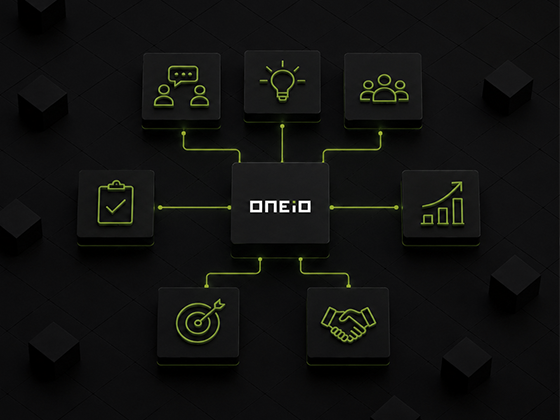




















You didn't build most of what IT runs on. You inherited it.
Dozens of suppliers. Hundreds of system dependencies. An estate that grew through acquisitions, platform migrations, and digital transformation initiatives nobody fully finished.
The integration layer is the part nobody fully owns. And it works - most of the time.
You think you're in control. Until something breaks you didn't know was connected.
Most integrations are fine. Until they aren’t.

The ticket says two things
Three parties involved, each running their own incident management, their own systems, their own version of what happened. Your ServiceNow ticket says fixed. Theirs doesn't. You're on the phone with the business, trying to explain something you don't have an answer to.

The context that walked out the door
Under FCA and PRA requirements, you need to be able to show traceability across internal and external systems, but you can’t. Under UK operational resilience rules and DORA, "it runs" is not a sufficient answer.

The audit you can’t answer
The knowledge you need to fix or change is gone. Previous teams have moved on. Documentation is out of date. Every change means re-learning the context, and hoping nothing breaks.
Make promises to the business and regulator. And keep them.
This is what actually being in control looks like.
Most integration setups are built like a project: stood up once, left to run. That works until something changes — another supplier, a migration, an acquisition. Things evolve, and nobody's sure who owns what anymore.
ONEiO closes that gap.
The result: more suppliers, more change, same governance. You make promises to the business and the regulator, and you keep them.
Use an operating model you can rely on

Built to master complexity
One integration connects any system to any system — no custom point-to-point work, no matter how many suppliers you add. When the FCA, PRA, or DORA auditor asks, you have it.

Built for continuity
We watch it 24/7. Most issues get caught and fixed before your business even feels them.

Built for certainty
Battle-tested experts keep every integration secure and audit-ready, so nothing depends on one person remembering how it works.
Stop chasing. Start delivering reliably.
IT Operations Manager
You're responsible for something you didn't build. Dozens of providers, hundreds of dependencies, in an industry that's more regulated every year. You're accountable for outcomes you can't actually guarantee.
With ONEiO: You hear about problems before the business does. And instead of chasing them down yourself, you're doing the work that actually matters.

Head of IT Operations
Under FCA PS21/3, PRA SS1/21, and DORA, you know your setup is a liability. The people who built it have moved on. The documentation is thin. Every change carries risk you can't fully see.
With ONEiO: We own the integration layer, start to finish. Every integration's documented in plain language, in one place. When a regulator asks, you already have the answer.
Run financial services IT the way the business needs it
Front up to regulatory scrutiny. PS21/3, SS1/21, DORA, and the CTP regime require demonstrable control over the integration layer. Built it into the operating model, so the evidence exists before the question is raised.
More vendors. Less Risk. Every acquisition, new supplier, or migration used to add risk. It doesn't anymore. The integration layer absorbs change without adding liability.
Be the enabler. The integration layer scales with the business, so your IT estate enables ambition instead of slowing it down.
Ready to see what running financial services IT on your terms looks like?