iPaaS vs Point to Point Integration vs Integration Ops - Which Actually Works in 2026
Over 900 integration tools exist, yet 71% of enterprise data remains disconnected. This video explains why point-to-point and iPaaS share the same operational flaw and why integration failures persist. Discover how Integration Ops shifts the focus from building integrations to owning and operating them at scale.
Over 900 integration solutions on the market. 71% of enterprise data still isn't integrated. The number hasn't moved in years - not because the tools don't exist, but because the approach is wrong.
This video breaks down the three ways organizations handle integrations today — point-to-point, iPaaS, and Integration Ops — and why only one of them was designed to actually work at scale. You'll see why both point-to-point and iPaaS share the same fundamental flaw, and what changes when you stop asking "which tool should we use" and start asking "who owns this after it ships."
Key Takeaways
→ Why point-to-point integration creates exponential complexity (5 systems = 10 connections, 20 systems = 190)
→ How iPaaS solved the build problem but created new operational failures
→ The shared flaw behind both approaches: no one owns integrations after they ship
→ Why only 2-3% of integration processes are fully documented
→ How Integration Ops mirrors the DevOps and SecOps evolution
→ The four fundamental shifts from project thinking to operational thinking
The Integration Reality
71% of enterprise data still isn't integrated
900+ integration solutions available on the market
2-3% of integration processes are fully documented
46% of IT leaders cite complexity as the biggest barrier to integration
39% of IT time spent maintaining custom integrations
29% of integration projects ship late
Timestamps
0:00 – 900+ tools, 71% of data still not integrated - the real problem
0:28 – Point-to-point integration: Where most organizations start
0:46 – How it works (until it doesn't)
1:01 – The brutal math: 5 systems = 10 connections, 20 systems = 190
1:20 – Why point-to-point doesn't scale
1:24 – iPaaS: The industry's answer to integration complexity
1:43 – The new problems iPaaS created
1:51 – Islands of automation and shadow integrations
2:06 – Different tools, same underlying problems
2:11 – Technology alone can't make integration accountable
2:20 – Only 2-3% of integration processes are fully documented
2:35 – The shared failure: Neither approach solves the operational problem
2:46 – Integrations don't end - they outlast every project timeline
2:52 – 39% of IT time on maintenance, 29% of projects ship late
3:04 – These aren't tool failures - they're operating model failures
3:19 – The real question: Who owns this after it ships?
3:26 – Integration Ops: The operating model that was missing
3:41 – Not another platform. Not another tool. A discipline.
3:44 – The DevOps and SecOps parallel
4:06 – Integration has reached the same inflection point
4:14 – Four fundamental shifts of Integration Ops
4:47 – The continuous lifecycle: Plan, implement, monitor, operate
4:55 – The result: Integrations that scale with the business
5:05 – You need iPaaS - but Integration Ops is the discipline on top
5:12 – Stop firefighting. Start operating.
FREE RESOURCE
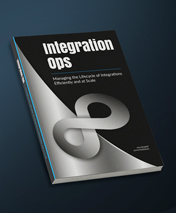
Learn more about Integration Ops and how it works in practice - the operating principles, service levels, and real-world applications: https://campaign.oneio.cloud/en/integration-ops-book-0825
About ONEiO
ONEiO pioneered Integration Ops as a managed service - combining integration infrastructure, 24/7 operations, and expert support so integrations scale with your business instead of draining it.
Website: https://www.oneio.cloud
#IntegrationOps #iPaaS #PointToPoint #EnterpriseIntegration #ITOperations #DigitalTransformation #DevOps #SystemIntegration #ManagedServices #B2BIntegration #ONEiO



Scale integrations with ease – even as demands accelerate