

Quick answer
MuleSoft is an API-led integration platform owned by Salesforce, best suited to organisations consolidating around the Salesforce ecosystem. Boomi is a platform-independent integration and data platform with hybrid deployment across cloud, on-premises and edge. ONEiO is managed iPaaS: the same integration outcomes delivered as a service, without operating a platform.
Integration platforms are the superglue that hold together today's complex IT ecosystems. As you connect more apps, systems and cloud services, you need an integration platform that scales up with your growing needs.
In this article we compare MuleSoft and Boomi, two of the largest integration platform as a service (iPaaS) vendors found in the market today.
Key takeaways
- MuleSoft is the Salesforce-ecosystem choice. Anypoint Platform, API-led architecture, deepest fit if your stack is consolidating around Salesforce. Salesforce also completed its acquisition of Informatica in November 2025, so its data management sits in the same company now.
- Boomi is the multi-vendor choice. Broader platform independence, hybrid deployment across cloud, on-premises and edge, and a large connector library. Owned by Francisco Partners and TPG since 2021, not by Dell.
- Both repositioned around AI agents in 2026. MuleSoft shipped Agent Fabric to register, broker, visualise and govern agents built on any platform. Boomi renamed its category to data activation and shipped a managed MCP service, an agentic workflow designer and an agent simulation environment.
- Neither publishes pricing, and both are enterprise-scale platforms where the licence is the smaller half of the cost. The larger half is the team operating what you build.
- Managed iPaaS is the third option. ONEiO delivers the same integration outcomes as an iPaaS, but ONEiO designs, runs, monitors and maintains the integrations, with SLA-backed outcomes and 24/7 operations.
What is MuleSoft
MuleSoft is a major player in the integration platform as a service (iPaaS) market focused on an API-led integration strategy. Acquired by Salesforce in 2018, MuleSoft is best known for its Anypoint Platform, which offers broad capabilities for API management and integration.
For ITSM professionals, MuleSoft's value lies in its ability to create a cohesive yet flexible integration network via its Anypoint Platform. Working like an enterprise service bus (ESB), Anypoint allows you to design, deploy, and manage APIs and integrations in a unified manner, supporting both SOA (Service-Oriented Architecture) and microservices environments.

In recent years, MuleSoft has expanded its focus into process automation, offering robotic process automation (RPA) and intelligent document processing (IDP) functionality. These areas bring MuleSoft’s service offering closer to broad, intelligent automation platforms like Workato and UiPath but away from an integration service vendor.
What is Boomi
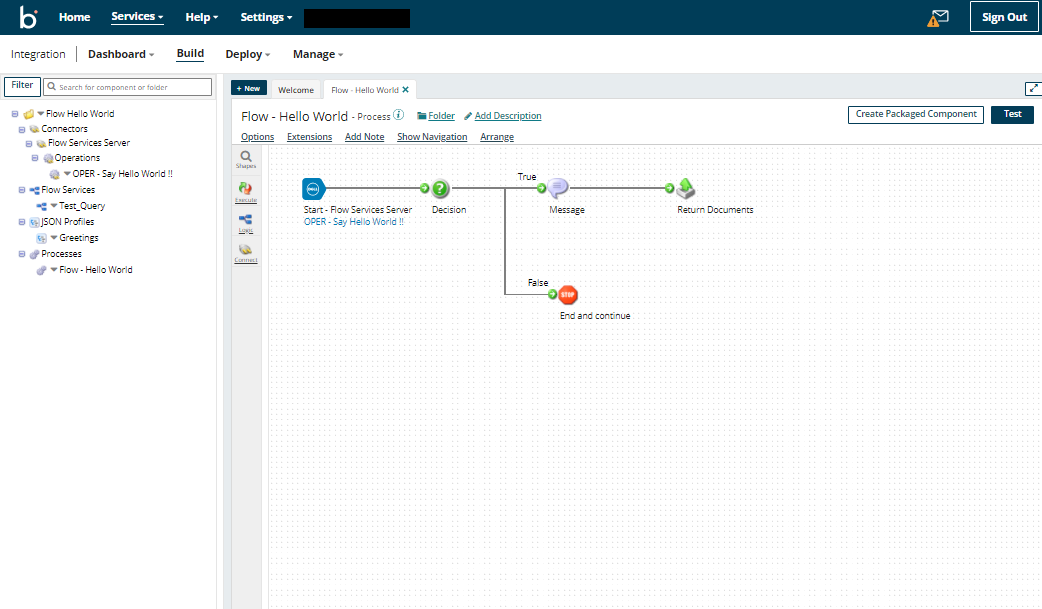
Boomi is a popular iPaaS solution that provides a user-friendly, low-code environment for integrating diverse applications, managing APIs, automating workflows, and synchronizing data across on-premises and cloud systems.
Boomi was originally founded in 2000 with a focus on on-premise data integrations. With over 20,000 customers worldwide, Boomi now has a broad service offering, including B2B/EDI management and real-time event processing.
Boomi was acquired by Dell Technologies Inc. in 2010 and divested in 2021. Today, Boomi is owned by Francisco Partners and TPG Capital.

MuleSoft vs. Boomi Integration Platform Comparison
Let’s go through how MuleSoft and Boomi compare in five common integration scenarios: API management, data integration, B2B/EDI integration, application integration and system integration.
API Management
MuleSoft's Anypoint Platform is built for API management. It provides an API Designer for creating RAML or OAS specifications, allowing you to define your API contract before implementation. An API Manager lets you set policies and monitor usage, giving you control over your API's behavior and performance. An API Portal offers documentation and interactive testing capabilities. Overall, MuleSoft gives you one of the most comprehensive solutions for managing API integrations.

Boomi integrates API management within its iPaaS offering. The platform includes API Lifecycle (management) tools to oversee your APIs from creation to retirement. Boomi's API Proxy allows you to securely expose your APIs, while API Analytics gives insights into usage patterns.
Data Integration
MuleSoft approaches data integration through its own DataWeave data language, which allows for complex data manipulations. The AnyPoint platform supports batch processing for handling large volumes of data, and works with various data formats including XML, JSON, and CSV. The platform also has a large number of ETL/ELT features to support data integrations.
Boomi also features a number of data integration solutions. The platform includes pre-built connectors for databases and applications. Its visual mapping interface allows for simplified data transformations. The Master Data Hub supports data synchronization across multiple systems.
B2B/EDI Integration
MuleSoft supports B2B integrations through EDI message parsing and generation capabilities. It includes support for the AS2 protocol, commonly used in B2B communications. In addition, AnyPoint includes Partner Manager features to handle external data integrations and different data standards of partners.
Boomi also provides comprehensive B2B/EDI capabilities, supporting multiple EDI standards such as X12 and EDIFACT. Its Trading Partner tools allow for detailed configuration of communication preferences. EDI mapping tools facilitate the transformation between EDI formats and internal data structures.
Application Integration
MuleSoft supports application integration through Anypoint Connectors for popular SaaS and on-premises applications. For custom applications, it offers a connector SDK. AnyPoint’s Flow Designer provides a visual environment for creating integration flows between different applications.

Boomi enables application integration through its library of AtomSphere connectors. Its low-code development environment allows for the creation of integration processes. Boomi also offers Integration Packs for common integration patterns, accelerating development.
System integration
As MuleSoft is owned by Salesforce, you can guarantee that they have deep ERP and CRM system integration capabilities. MuleSoft supports various system integration patterns, including real-time, batch, and event-driven architectures.
Boomi's Integration Packs provide templates for common integration scenarios. The platform supports both cloud-to-cloud and cloud-to-ground integrations, with the Atom runtime enabling processing close to data sources.
What changed for MuleSoft and Boomi in 2026
Both vendors moved in the same direction this year, and further than most comparisons have caught up with. Each repositioned around AI agents, and each now sells a governance layer for agents as the headline product rather than the integration platform underneath it.
MuleSoft
MuleSoft launched Agent Fabric, generally available from October 2025, aimed at what it calls agent sprawl: the problem of AI agents proliferating across an enterprise on different platforms with no central oversight. It has four parts. Agent Registry centralises discovery and registration of agents. Agent Broker routes tasks to the agent best suited to handle them. Agent Visualizer maps the agent estate and its performance. Agent Governance applies security, compliance and policy controls to agent interactions. The design point is that it governs agents regardless of which platform built them.
Separately, Salesforce completed its acquisition of Informatica on 18 November 2025, valued at roughly $8bn. Informatica's data management now sits alongside MuleSoft inside Salesforce, which is worth watching if you are evaluating either for a long-term data or integration strategy.
Boomi
Boomi went further and changed its category. It no longer describes itself as an integration company. The current positioning is data activation, with AI agents framed as the primary interface replacing traditional user interfaces.
The product slate announced at Boomi World in May 2026 follows that: Boomi Connect, a managed Model Context Protocol service that bridges AI interfaces including Claude, Gemini, ChatGPT Enterprise and Copilot to more than 1,000 enterprise tools with authenticated, metered execution. An MCP Registry consolidating Boomi-built servers and third-party tools into one governed catalogue. Boomi Orchestrate, which composes workflows, APIs, data models and agents from a described business problem. Agent SIM for testing agent behaviour before production. Boomi Companion, which lets coding agents build and deploy integrations from natural language. Plus Knowledge Hub, Meta Hub, DataDetective and a distributed agent runtime for local deployment.
What this means for the evaluation
If you are buying either platform to run integrations, you are now buying it from a vendor whose product strategy has moved up the stack. That is not automatically bad. Agent governance is a real problem and both are credible at it.
It does change the question, though. The integrations still need building, monitoring and repairing when something upstream changes. Neither 2026 roadmap reduces that work, and both add a new category of thing to govern on top of it. If your integration team was at capacity in 2025, check what these roadmaps assume about your headcount in 2027.
Factors to consider when comparing MuleSoft and Boomi
On the surface of it there are not many differences between MuleSoft and Boomi. Here are some additional factors to consider.
- Scalability and performance:
Both MuleSoft and Boomi have a track record of large deployments. While MuleSoft uses a clustered architecture for enterprise-scale deployments, Boomi opts for a lightweight, distributed Atom runtime, allowing for more efficient local processing.
- Monitoring:
MuleSoft provides Anypoint Monitoring with customizable dashboards for oversight, while Boomi integrates monitoring capabilities directly into its AtomSphere platform.
- Security and compliance:
Both MuleSoft and Boomi have extensive security functionality. MuleSoft offers Anypoint VPCs for isolated network environments. Boomi emphasizes on-premises deployment options for handling sensitive data.
- Community and ecosystem:
MuleSoft's ecosystem is generally larger and more established, reflecting its longer presence in the enterprise market.
Why choose MuleSoft?
MuleSoft may be a good option for you if you’re consolidating your enterprise tech stack around Salesforce. It can handle most cloud-based integration patterns and a broad range of pre-built connectors to and from Salesforce apps.
MuleSoft highlights:
- API creation and integration capabilities.
- Supports automation with a large template library and RPA access.
- Wide capabilities in composite service integration.
Pros
- Deepest Salesforce integration of any iPaaS. MuleSoft has been Salesforce-owned since 2018, so if your estate is consolidating around Salesforce the connector coverage and roadmap alignment are unmatched.
- Mature API management. Anypoint provides API design, policy management, monitoring and a developer portal in one place. For organisations running an API programme rather than point integrations, this is the stronger platform.
- Cross-platform agent governance. Agent Fabric governs agents built on other vendors' platforms, which is unusual and useful in a mixed estate.
Cons
- Developer-heavy. MuleSoft assumes engineering capacity. Organisations without a dedicated integration team consistently under-estimate the staffing required.
- Cost and contract scale. Enterprise licensing plus professional services makes it one of the more expensive options, and pricing is not published.
- Ecosystem gravity. The further you are from Salesforce, the weaker the argument for MuleSoft over a platform-independent alternative.
Why choose Boomi?
Boomi can be an option for you if you have a large number of different legacy and cloud-based systems you need to integrate through an ESB-type set-up. While it lacks low-code or testing functionality found in other iPaaS solutions, it has a large library of pre-built connectors.
Boomi highlights:
- Large library of pre-built connectors
- Hybrid deployment across cloud, on-premises, and edge integrations
- Customer training program with over 30,000 certified individuals
Pros
- Platform independence. Not tied to any application vendor, which matters in multi-vendor and multi-cloud estates.
- Deployment flexibility. The distributed Atom runtime supports cloud, on-premises and edge, including local processing where data cannot leave a boundary.
- Breadth. More than 1,000 enterprise connectors and a large certified user community.
Cons
- Category drift. Boomi's stated focus is now data activation and agentic AI, not integration. If you are buying it as an integration platform, you are buying a product that is no longer the company's headline.
- Surface area. The 2026 product slate is large and fast-moving. More capability means more to evaluate, license and govern.
- Pricing opacity. As with MuleSoft, no published pricing and separate professional services.
ONEiO as an Alternative to MuleSoft and Boomi
If you’re not sure if MuleSoft or Boomi is the best option for your integration needs, you may consider a third alternative, ONEiO.
.png)
ONEiO gives you a streamlined, no-code integration service that stands out for several reasons:
Effortless integrations as a service
While MuleSoft and Boomi have some low- and no-code functionality, ONEiO is the first integration platform that offers end-to-end integrations as a service. This is especially valuable in case you don’t plan to hire a full team of system integrators to maintain your integration ecosystem.
Integration automation beyond pre-built connectors
ONEiO supports a wide range of endpoint types and data formats, including JSON, XML, CSV, and plain text. It provides robust mechanisms for both push (using webhooks and REST/SOAP) and pull (via API, SFTP, SQL) data processing. This flexibility ensures that ONEiO can handle various integration scenarios with ease.
Security and compliance
ONEiO offers strong security features, including encrypted credentials and support for multiple authentication standards (Basic Authentication, Token, API Key, OAuth, etc.). It also allows connections to internal networks and supports reverse proxies or whitelisting. The platform is built on AWS and ensures high availability and GDPR compliance.
Business logic and data orchestration
ONEiO provides a no-code editor for creating business logic, transforming, and translating data. It supports various transformation options like regular expressions, case transformations, and date formatting. The platform’s rule robot automates rule creation based on common use cases, making it easy to adjust or add new rules without disrupting existing integrations.
.png)
What changes when integration is a service rather than a platform
ONEiO is a managed integration service, sometimes described as managed iPaaS. It delivers the same outcomes an iPaaS delivers, which is any-to-any connectivity, lifecycle management and cloud-native delivery, with one structural difference: ONEiO designs, runs, monitors and maintains the integrations, with SLA-backed outcomes and 24/7 operations. Customers decide how much control they keep.
Choose ONEiO when: you want integration outcomes without staffing an integration team. Choose MuleSoft or Boomi when you have mature in-house integration engineering and want maximum platform control.
One integration connects multiple endpoints. No point-to-point custom work for each new connection. Customer systems stay as they are and keep evolving independently. Adding the tenth partner costs roughly what adding the second one did.
"I don't care what kind of system the customer is using, we can connect any with any. And that is really one of the biggest benefits I see on ONEiO, which no other solution provider I know can promise or deliver." — Michael, MHP
Continuity is somebody's job. Microservices spread across geographic sectors with load balancing. Persistent queuing so data is not lost when a system on either end goes down. AI-powered monitoring 24/7/365. Upgrades, migrations and partner-side changes handled without breaking flows.
"Unbothered. I think that's the thing, how it changed us. We use our time to do other things, to monitor other things instead of the data exchanges." — Dmitri, Espoo
Outcomes are committed, not attempted. Integration specialists own security and compliance for the integrations themselves, not just for the platform underneath them. Issues are caught and resolved before they reach the business.
"ONEiO delivered that in three weeks, which is a remarkably great job." — Hanna, DNV
When to choose ONEiO?
ONEiO is especially well suited for seamless ITSM integration across internal and externally managed IT services. It offers a turnkey solution for the complex integration needs of both global enterprises and IT service providers.
ONEiO highlights:
- ONEAi artificial intelligence model trained specifically for IT service integration.
- Faster time-to-value. Typical integrations take 2 weeks from idea to production.
- 100% satisfaction guarantee based on proven enterprise-grade integration service.
When ONEiO is not the right fit
- You have a mature in-house integration engineering team and want maximum platform control. Buy the platform.
- You are running a formal API programme with published, externally consumed APIs. That is MuleSoft's design centre.
- Your requirement is a data pipeline or master data management. Look at Informatica, Fivetran or Talend.
- You want to build and govern your own AI agent estate. Both MuleSoft and Boomi now sell that. ONEiO does not.
- You need integration at the edge, processing locally where data cannot leave a physical boundary. That is Boomi's Atom runtime.
- You have exactly two systems to connect, once, and they will not change. A point-to-point build is cheaper.
Bottom line on MuleSoft vs Boomi
If your estate is consolidating around Salesforce and you are running an API programme, MuleSoft. If you are multi-vendor, need on-premises or edge processing, or want to avoid tying your integration layer to an application vendor, Boomi.
What is new in 2026 is that neither company is primarily selling you an integration platform any more. Both are selling agent governance, with integration underneath it. That is a reasonable bet on where enterprise software is going. It is also a signal about where their engineering attention will sit for the next few years.
The integrations will still break at 2am. Somebody still has to be awake for that. On both of these platforms, that somebody works for you.
Managed iPaaS is the option where they do not.